
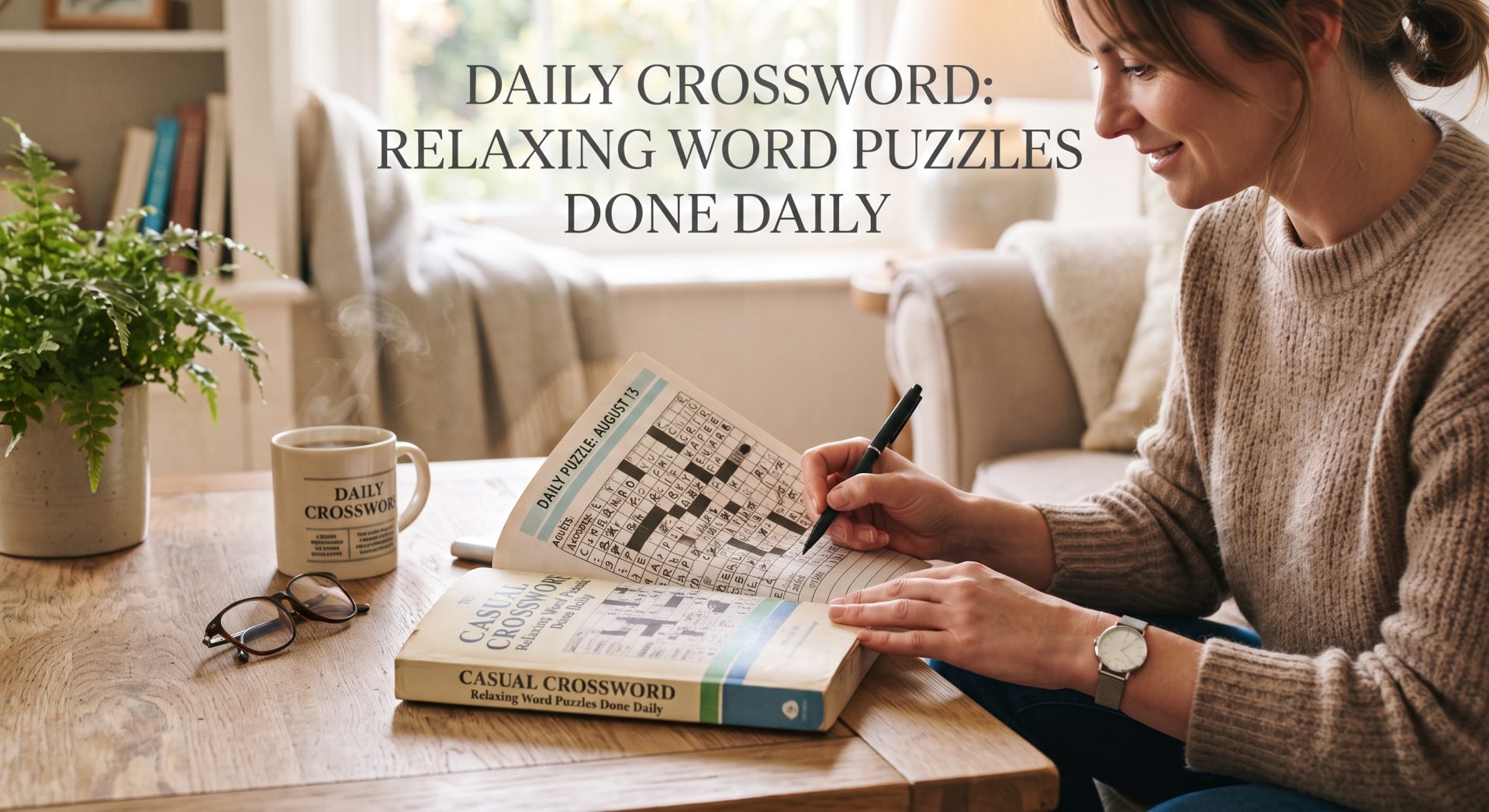
Some puzzle games demand furious speed, but a casual crossword asks for the opposite: a quiet cup of coffee, a freshly revealed grid, and the small satisfaction of watching letters click into place. This daily, cozy word game has become a gentle anchor for thousands of players who open the same grid each morning, fill in the easy clues first, and let the stubborn corners of the puzzle stretch across the rest of the day. It is the crossword reimagined for the modern era: accessible, touch friendly, and quietly addictive from the very first clue.
What Is a Casual Crossword?
A casual crossword is a word puzzle presented in a deliberately lightweight and relaxing format. Instead of burying you in a fifteen by fifteen grid full of obscure trivia, the game focuses on everyday vocabulary, playful clue writing, and a pace that never rushes the solver. Grids are sized for short sessions that still deliver the genuine mental tug of a real crossword, and every completed box earns a small and pleasant flourish of animation. The design philosophy is clear: the puzzle should feel like a rest stop rather than a marathon, and players keep returning precisely because it never demands too much of them in one sitting.
The daily format is the emotional heart of the experience. Each morning a new grid appears, built around a gentle theme such as "cozy mornings" or "small-town life," and solving it quietly becomes part of the routine in a way that heavier games cannot match. Because the vocabulary stays friendly and the clues are written with a smile, the game appeals to families, retired solvers, and anyone who wants a smart yet stress-free way to ease into the day.
How the Daily Puzzle Works
Every day brings exactly one fresh grid, and that single puzzle cadence is what keeps the experience feeling precious rather than overwhelming. You are never buried under a backlog, and missing a morning is not a disaster because a new grid is always waiting on the horizon. The default size keeps a session comfortably short: enough clues to satisfy, not enough to swallow an entire lunch break. Players who want a bigger challenge can usually find weekend editions with larger dimensions and a slightly trickier style of clue writing.
Progress is tracked in a gentle, encouraging way. Every letter you place correctly locks into the grid, and the board slowly transforms from scattered entries into a complete wall of words. That gradual reveal is one of the quiet joys of the daily casual crossword; there is nothing quite like the moment a stubborn across clue suddenly opens three down-entry refills and the entire puzzle clicks into focus.
The Hint System
Revealing a Single Letter
A well-designed hint system is what separates a cozy casual crossword from a frustrating one. If a clue has you completely stuck, you can reveal a single letter for a modest cost, which usually rearranges your thinking without giving away the whole answer. Because hints are limited, they act as a nudge rather than a crutch: you still have to reason through the remaining boxes yourself, but the pressure valve is always there when the grid turns stubborn.
Softer Help for Stubborn Clues
The game also offers quieter forms of assistance that never spoil the joy of discovery. You can highlight any clue, view a lightly reworded version of the same hint, or shake the grid to see which crossings are already nearly solved. These little tools reinforce the casual crossword spirit of gentle guidance. Short clue lengths and solver friendly conventions mean that even the hardest entries usually crack after a moment of reflection rather than a trip to the search engine.
Streaks and Daily Habits
The streak mechanic is the real engine behind the game's gentle addiction. Finish today's grid before midnight and the streak survives another day; miss one morning and the counter quietly returns to one. Streaks matter because they turn a simple puzzle into a daily ritual, and the game celebrates milestones with cheerful badges for seven days, thirty days, and a full season of consistent solving. For many players, a long casual crossword streak becomes a point of genuine pride, even when the only reward is a pretty animation on a quiet Sunday morning.
Because the streak resets at local midnight, the game pulls you gently back into the habit without ever nagging at you. There is no harsh penalty for a reset beyond the number itself, and the overall tone stays supportive rather than punishing. That soft pressure is the entire secret of the daily puzzle genre: enough structure to keep you engaged, flexible enough to forgive a busy week, and always ready to welcome you back whenever you return.
Tips for Solving Faster
- Fill the short entries first. Three-letter words and common prefixes give you instant crossings that unlock the longer answers stacked around them.
- Read clues literally. The game loves playful wording, so a clue that sounds like a pun is usually hiding a straightforward answer right behind it.
- Spend hints late. A single revealed letter can waste the momentum of a nearly finished grid, so save the hint button for the final stubborn corner.
- Watch for the theme. Daily grids are built around a theme, and the theme answers often anchor the whole board; spot those early and everything else slides into place.
- Step away and come back. The oldest trick in the solver's handbook still works best: a short break resets your mental map, and the answer you were missing often surfaces within minutes.
- Play wherever you like. Because the grid fits one screen comfortably, you can carry your casual crossword into the kitchen, onto the bus, or into bed without losing a single letter of progress.
Why a Casual Crossword Fits Your Morning
There is a reason the daily puzzle has become a morning ritual for so many people. The daily crossword gives the brain a warm-up that is challenging enough to feel meaningful and calm enough to stay relaxing. Compared with action games and competitive modes, there is no ranking, no countdown timer, and no demand for lightning reflexes; the only score that truly matters is the small burst of satisfaction when the final box snaps into place.
That blend of accessibility and quiet achievement explains the surprising endurance of the genre. Solver communities swap clue jokes, trade favorite grids, and celebrate tiny victories in the comments, yet the core experience stays wonderfully personal. Whether you finish a grid in four minutes or stretch it across a whole day, the daily casual crossword rewards you at exactly the pace you choose, and that freedom is what keeps so many players coming back morning after morning.
Frequently asked questions
Is a casual crossword suitable for beginners?
Absolutely. The clue banks are written with everyday vocabulary, and the daily grids start small enough that a complete newcomer can usually finish the very first puzzle. The hint system is also forgiving by design, which makes it easy to learn the rhythm of crossings and shared letters without any frustration.
How does the streak system work?
Complete the daily grid before midnight in your local time zone and the streak counter increases by one. If you miss a day, the counter resets to zero, but the game stays friendly about it and simply hands you the fresh grid as usual. The streak in a casual crossword is purely motivational, never a punishment.
Can I play more than one grid per day?
Most versions include bonus grids, weekend editions, and themed packs alongside the main daily puzzle. Once you finish the primary grid, those extras give you another reason to keep solving, and they use the exact same hint and streak mechanics as the headline puzzle.
Do I need an account to keep my progress?
Progress is stored locally on most versions, but creating a free account lets you sync streaks across devices and share your statistics with friends. That is a worthwhile upgrade if you enjoy comparing completion times on the weekly challenges.
What makes the game different from a classic newspaper crossword?
The tone is friendlier, the vocabulary is lighter, and every interaction is built for a touchscreen. Where a newspaper crossword can start to feel like homework, the casual crossword feels like a hobby, and that single difference explains why players keep returning to it each morning.